Over the years, the electric vehicle manufacturer NIO has managed to stir up more intrigue and conflicting discussions than any other Chinese startup in its sector.
What makes it so beloved by people, yet criticized more than any other Chinese auto company?
The NIO investor community is one of the most ‘devoted.’ Are all these people just investors waiting to recoup their money after the crash of 2021, or do they see something that the rest of the world simply ignores?
We are almost in 2026, and the car has become a gadget for many. For a lot of us, the complexity of the engines and the sound produced by the exhaust are becoming less important—though these criteria remain relevant for enthusiasts, the masses dictate the global trend. The future means efficiency, whether that involves time, energy, or costs. Electric cars prove that, despite their immaturity, their simplicity offers undeniable advantages.
Let’s go back to NIO
The company is divided into three sub-brands (Nio, Onvo and Firefly) which are meant to satisfy the needs of as many consumers as possible, regardless of their budgets or tastes.
Each with its own identity, from sedans that make you feel like you’re in a luxury German car, to small city cars ideal for urban mobility, and even enormous SUVs that can squeeze in a football team—NIO has managed to build an impressive portfolio of vehicles, considering it was founded only 11 years ago.
The true power of NIO and Swap Stations:
Although it initially seemed like an impossible idea to realize, NIO focused on solving the biggest problem faced by all early adopters of electric cars: the charging issue. Instead of the charging method used by all other manufacturers, NIO chose to test the impossible: ‘We will build a vast network of battery swap stations, just like gas stations, but for electric cars.’
Crazy, right? But they did it. Currently, NIO counts over 3,600 battery swap stations in China and Europe, and the network is expanding rapidly. Beyond mere size, they have had time to refine the idea, and the construction of the fifth generation of swap stations is set to begin.
What problems does the model developed by NIO solve?
- Reduced waiting time (approximately 3 min)
- Superior convenience:
- Let’s say it’s raining outside, and you need to charge your car… that’s what I’m talking about. The battery swap is done without having to leave the vehicle—it’s 100% automatic and convenient.
- Safety:
- We all know those social media videos of electric cars catching fire, right? Battery technology is still evolving, and Chinese companies, pressed by competition, are the martyrs who risk their reputations just to stay alive in such a competitive market. The electric car battery is a sensitive component that creates headaches for buyers from several perspectives, as we will see below.
- Unlike other electric cars, the model proposed by NIO prioritizes safety, as battery verification takes place with every swap, which significantly reduces risks of any kind.
- Flexibility:
- “Electric cars have a standard battery capacity, which the buyer chooses based on their own needs. Let’s say that 99% of the time you use the car for short trips within the city. Therefore, you will choose a car with a reduced battery capacity to maximize consumption efficiency and lower the purchase price. If, at some point, you need to take a longer trip, you will either stop several times to charge, or you will need another vehicle.
- The NIO solution: The battery capacity can be changed, giving you the option to choose small or large batteries with every swap, depending on your current needs.
- Fewer worries:
- We all know that after a certain number of miles or years, electric car batteries become the main problem. With NIO, this issue disappears. Firstly, although you own the battery, it doesn’t remain in your vehicle forever; instead, it is circulated among countless cars and swap stations. The idea is simple: A swap station will never offer you a hyper-worn battery.
- On top of that, they have something called: BAAS – Battery as a Service. Essentially, you buy the car, but not the battery. The battery can be used via their monthly subscription service, which, although it might seem strange at first glance, has the main advantage of allowing you to purchase the car at a much lower price by leasing the battery.
- Besides checking the condition of the batteries, another important aspect is their long-term health. We all know that ultra-fast charging damages any battery over time. If you want to partially eliminate the waiting problem and resort to a fast charger, your battery will suffer over time. What happens inside the swap stations? The batteries are charged at much ‘healthier’ speeds, and no one is waiting for them. Slower charging means a longer battery life, so the model is much more environmentally friendly than classic charging.
- One more very important aspect is the recycling process. The swap stations collect data in real-time, with all batteries continuously providing statistics and data. When they reach a certain level of degradation, their recycling can be done much more efficiently (faster and cheaper) compared to any car with the battery integrated into the chassis.”
Recently, giants like CATL have started to develop their own station networks, utilizing a different station design. Is this the right direction? Will NIO dominate the auto market if its model proves to be far more efficient and sustainable in the long run? We are currently at an inflection point where, for the first time, the auto manufacturer so beloved in China seems ready to spread its wings. Will it be possible to stop it, or will it dominate the entirety of China and Europe in the next 10 years? The last two models launched this year, the ONVO L90 and the NIO ES8, show us that the company is heading in the right direction, with orders increasing significantly compared to previous launches.
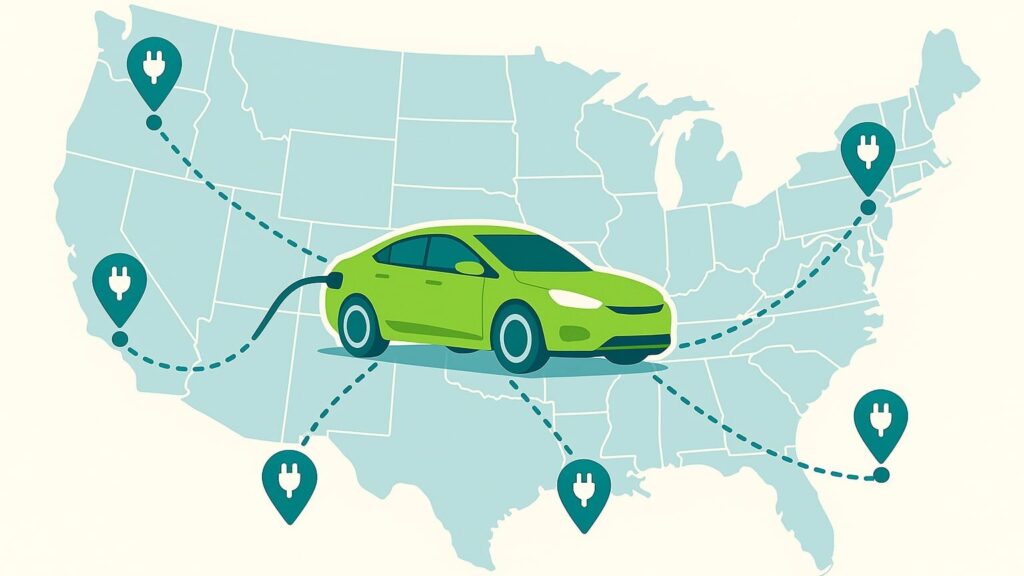
Will the U.S.A suffer as a result of the decision to ban the purchase of Chinese cars? Transport is a key factor in development, and efficient, affordable cars can be a key factor in a country’s development. Only time will answer all these questions.
This represents only my personal opinion; please treat it as such. I await your thoughts below, and why not, suggestions for other topics. Thank you for your time!