
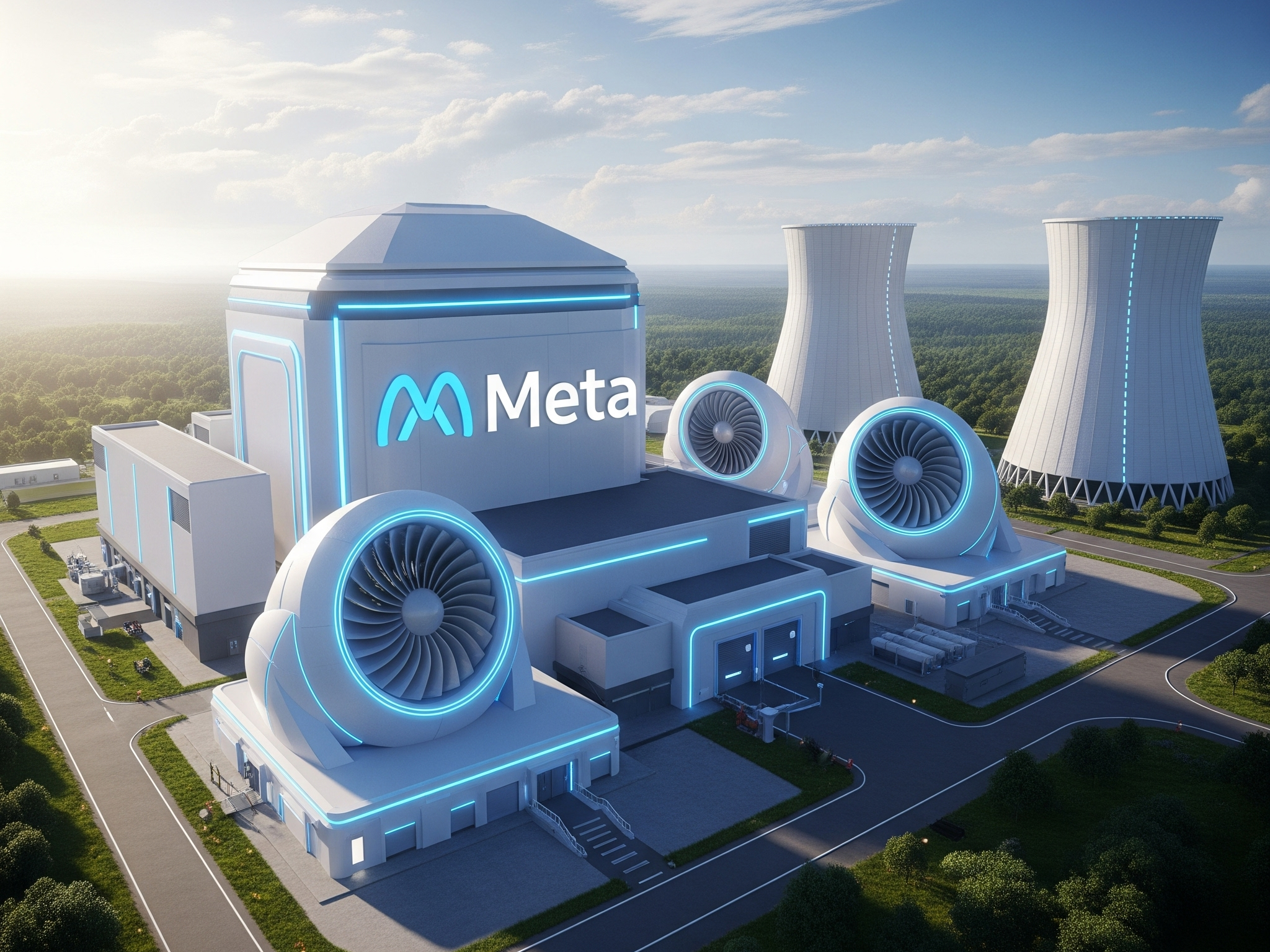
Meta’s recent announcement of a 20-year power purchase agreement (PPA) with Constellation Energy Corporation for nuclear power from the Clinton Clean Energy Center in Illinois marks a pivotal moment in the energy strategies of major tech companies.
This deal, commencing in June 2027, signifies a growing trend where the immense energy demands of artificial intelligence (AI) and data centers are driving tech giants towards reliable, carbon-free baseload power sources, with nuclear energy emerging as a key solution.
The Driving Force: AI’s Insatiable Energy Appetite
The exponential growth of AI, with its vast computational requirements for training complex models and running large-scale operations, has placed an unprecedented strain on existing energy infrastructure.
Data centers, the physical backbone of Meta’s (and other tech companies’) platforms, are projected to consume a significant percentage of global electricity in the coming years. While renewable energy sources like solar and wind have been central to many tech companies’ sustainability goals, their intermittency poses a challenge for powering always-on, high-demand operations.
This is where nuclear power, with its consistent, 24/7 output and zero carbon emissions, becomes an increasingly attractive option. Meta’s Head of Global Energy, Urvi Parekh, explicitly stated that “Securing clean, reliable energy is necessary to continue advancing our AI ambitions.”
A Strategic Shift Towards Nuclear
Meta’s foray into nuclear power is not an isolated incident. It’s part of a broader industry trend. Other tech giants like Google and Microsoft have also been making headlines with their investments in nuclear energy. Microsoft, for instance, has secured power from Constellation’s Three Mile Island plant, and Google has invested in advanced nuclear energy projects with Elementl Power.
This collective shift underscores a recognition within the tech sector that a diversified clean energy portfolio, including nuclear, is essential for meeting both their massive energy needs and their ambitious decarbonization targets.
Meta itself had previously announced its intention to explore nuclear capacity, even releasing a request for proposals to identify nuclear energy developers for 1-4 gigawatts of new nuclear generation capacity in the US by the early 2030s. This deal with Constellation is a significant step in fulfilling that ambition.
The Clinton Clean Energy Center: A Lifeline and an Expansion
The Constellation Energy Clinton Clean Energy Center, a single-unit boiling water reactor, is central to this agreement. The plant, which entered commercial operation in 1987, was actually slated for premature closure in 2017 due to financial losses. It was saved by Illinois’ Zero Emission Credit (ZEC) program, which provided financial support until mid-2027.
Meta’s 20-year PPA effectively replaces this state-funded program, ensuring the long-term operation of the plant without direct taxpayer support.
The deal encompasses the purchase of approximately 1.1 gigawatts (1,121 megawatts) of the Clinton plant’s emissions-free nuclear energy output, an amount capable of powering roughly 800,000 homes.
Furthermore, the agreement includes Constellation’s commitment to expand the Clinton plant’s clean energy output by an additional 30 megawatts through plant “uprates” – upgrades that enhance efficiency and capacity. This incremental addition of clean energy directly contributes to the grid and Meta’s clean energy matching goals.
Beyond Energy: Economic and Environmental Impacts
The implications of this deal extend far beyond simply securing power for Meta’s data centers. It carries significant economic and environmental benefits for the region and the broader energy landscape:
- Job Preservation and Creation: The agreement is expected to preserve 1,100 high-paying local jobs at the Clinton facility, a critical factor for the local economy. It also signifies a sustained demand for skilled labor in the nuclear sector.
- Tax Revenue: The deal will generate an estimated $13.5 million in annual tax revenue for local communities, providing a stable source of funding for public services.
- Community Investment: Constellation has also committed to investing $1 million over five years in charitable giving to local nonprofits in Clinton and surrounding communities, supporting workforce development, social services, and education.
- Carbon Emission Avoidance: By keeping the Clinton plant operational, the agreement prevents the release of over 34 million metric tons of carbon over 20 years, an amount equivalent to taking approximately 7.4 million gasoline-powered cars off the road for a year. This aligns with Meta’s commitment to matching 100% of its electricity use with clean and renewable energy, even though the power flows into the regional grid rather than directly to Meta’s data centers.
- Market-Based Solution: The PPA demonstrates a market-driven approach to supporting existing nuclear infrastructure, potentially serving as a model for other aging nuclear plants facing similar economic challenges. It reduces reliance on taxpayer subsidies and fosters private sector investment in clean energy.
The Broader Context and Future Outlook
Meta’s agreement with Constellation is indicative of a broader strategic realignment within the energy sector, driven by technological advancements and urgent climate goals. The rise of AI and the increasing demand for reliable, carbon-free energy are pushing companies and policymakers to re-evaluate the role of nuclear power.
The deal also highlights several key trends:
- Shift in Public Perception: While nuclear power has faced historical opposition, there’s a growing acknowledgment of its critical role in decarbonization, particularly with the advent of advanced reactor designs and small modular reactors (SMRs). This shift in public and political sentiment is creating a more favorable environment for nuclear investments.
- Government Support: States and the federal government are increasingly enacting legislation and providing incentives to support advanced nuclear energy. The U.S. Inflation Reduction Act, for instance, offers tax credits for advanced nuclear projects.
- Corporate Power Purchase Agreements (PPAs) for Nuclear: The model of tech companies directly purchasing nuclear power through PPAs is a relatively new but impactful development. It provides financial certainty for nuclear operators and can unlock significant capital for both existing and new projects.
While challenges like high upfront costs, regulatory hurdles, and waste management remain, Meta’s 20-year commitment signals a strong belief in nuclear energy as a foundational component of a sustainable, AI-driven future.
This landmark deal not only secures a significant chunk of clean energy for Meta’s demanding operations but also provides a critical lifeline for an existing nuclear plant, demonstrating a powerful synergy between technological innovation and sustainable energy solutions. It sets a precedent for how the tech industry might continue to influence the future of global energy.