The electric vehicle (EV) market is a battlefield, and for ambitious newcomers, merely surviving is a victory. Rivian Automotive Inc. (NASDAQ: RIVN), a U.S.-based EV manufacturer, embodies this struggle.
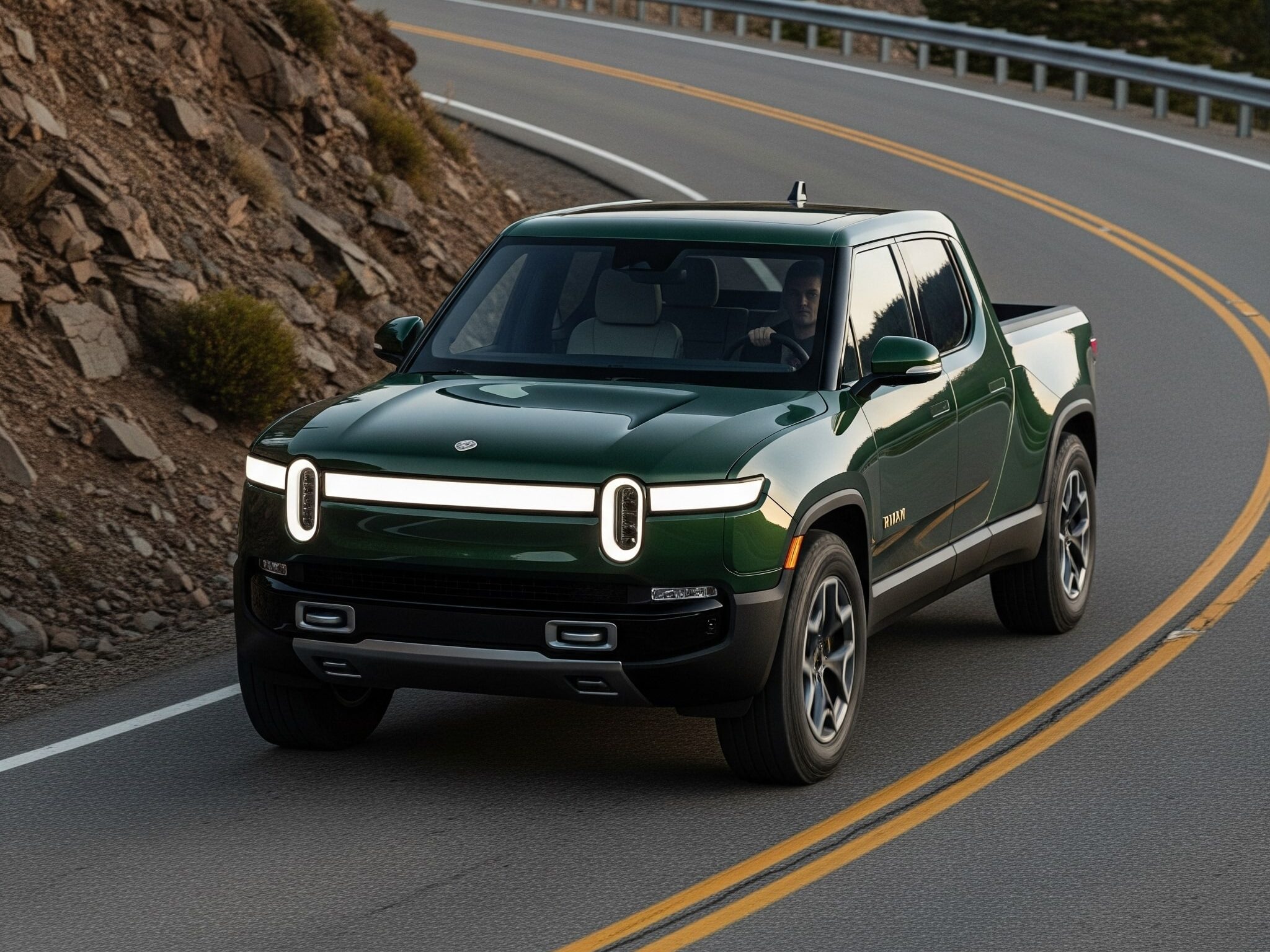
Known for its stylish and rugged R1T pickup and R1S SUV, Rivian burst onto the scene promising an “adventure lifestyle” that resonated with a segment of the market. Yet, as a relatively smaller player challenging titans like Tesla and traditional automakers, Rivian faces immense pressure to scale, achieve profitability, and navigate a rapidly evolving global landscape – a landscape increasingly influenced by the looming presence of Chinese EV manufacturers.
The Evolution of an EV Aspirant: From Startup to Scaler
Founded in 2009 by RJ Scaringe, Rivian spent years in stealth mode, quietly developing its innovative “skateboard” platform designed to house batteries and electric drivetrains.
Its public debut in 2018 with the R1T and R1S immediately garnered attention for their compelling design, impressive off-road capabilities, and integrated technology. Backed by strategic investments from Amazon (a major customer for its Electric Delivery Vans, or EDVs) and Ford (though Ford later divested most of its stake), Rivian aimed to redefine the electric adventure vehicle.
The journey from concept to mass production, however, proved incredibly challenging. Like many startups, Rivian grappled with initial production bottlenecks, supply chain woes, and the sheer capital intensity of automotive manufacturing.
Early financial reports showcased substantial losses, typical for a company investing heavily in factories, R&D, and scaling its operations. This period was characterized by high cash burn as Rivian built out its Normal, Illinois factory and began fulfilling its ambitious order book, including thousands of EDVs for Amazon.
Numbers Under the Microscope: Are They Turning the Corner?
Recent financial disclosures provide a more optimistic, albeit cautious, outlook for Rivian, indicating a significant shift towards operational efficiency.
Production & Deliveries:
- Q1 2025 Production: 14,611 vehicles.
- Q1 2025 Deliveries: 8,640 vehicles. While deliveries were down from Q4 2024 (14,183 units), Rivian emphasized these were in line with internal expectations for the first quarter.
- Full-Year 2025 Guidance: Rivian has adjusted its 2025 delivery outlook to 40,000-46,000 vehicles. This is a revision downwards from its previous guidance of 46,000-51,000, citing “evolving trade regulation, policies, and tariffs” as a factor. It’s a pragmatic adjustment that reflects external headwinds.
Financial Performance (Q1 2025 highlights):
- Revenue: $1.24 billion, exceeding analyst expectations.
- Gross Profit: A pivotal milestone was achieved in Q1 2025, with Rivian reporting a gross profit of $206 million. This marks their second consecutive quarter of positive gross profit (following $170 million in Q4 2024), a monumental leap from the substantial gross losses in previous periods. This signifies that Rivian is now making money on each vehicle it sells before considering operating expenses.
- Net Loss: While still operating at a net loss of $541 million in Q1 2025, this represents a significant improvement from a $1.45 billion net loss in Q1 2024. The trend is clearly towards narrowing these losses.
- Adjusted EBITDA Loss: Rivian maintained its adjusted EBITDA loss forecast of $(1.7B) to $(1.9B) for the full year 2025, with expectations of achieving modest positive gross profit for the entire year.
- Cash Position: The company ended Q1 2025 with a robust cash balance of approximately $7.2 billion (including cash, cash equivalents, and short-term investments). This substantial liquidity provides a crucial cushion for ongoing operations and future investments.
These numbers suggest a company that is rigorously focused on cost efficiency and manufacturing optimization. The ability to generate gross profit on its vehicles is a critical validation of its production strategy and internal cost-cutting measures.
The Chinese EV Storm: A Looming Threat
Even as Rivian shows signs of internal improvement, the global EV market is being reshaped by the rapid rise of Chinese manufacturers, primarily led by BYD. These companies pose a multi-faceted threat:
- Unmatched Price Competitiveness: Chinese EVs can be produced significantly cheaper than their Western counterparts, sometimes by as much as 47%. Models like the BYD Seagull sell for less than $10,000 in China, a price point unattainable for U.S. or European manufacturers.
- Vertical Integration: Many Chinese EV giants control their entire supply chain, from raw materials and battery production to software, granting them immense cost advantages and resilience against disruptions.
- Rapid Innovation & Speed to Market: The sheer volume and competition in China’s domestic market have fostered companies that can design, develop, and launch new models with incredible speed.
Currently, the U.S. market is largely protected from this wave by steep tariffs. The Biden administration recently escalated tariffs on Chinese-made EVs to 100%, effectively pricing them out of the U.S. market. This, coupled with national security concerns and a broader strategy to “de-risk” supply chains, creates a high barrier.
However, the threat isn’t just direct imports. Chinese companies could establish manufacturing facilities in countries with free trade agreements with the U.S. (e.g., Mexico) or partner with existing manufacturers to circumvent tariffs, as some are already exploring. The pressure to compete on price, feature sets, and speed of innovation will persist, regardless of tariffs, forcing all players to become more efficient.
Rivian’s Defensive and Offensive Strategies
Against this backdrop, Rivian is executing a multi-pronged strategy to secure its future:
Cost Rationalization and Efficiency: The improvement in gross profit is not accidental. Rivian has meticulously worked on reducing material costs, improving manufacturing processes, and boosting factory utilization. The planned month-long shutdown of its Normal, Illinois plant in the second half of 2025 for retooling is aimed at further increasing efficiency by an estimated 30%. They have also secured a $6.6 billion loan from the U.S. Department of Energy to support factory expansion.
Broadening the Product Portfolio with R2 and R3: This is arguably Rivian’s most critical strategic move. The R1T and R1S are premium, niche products. The upcoming R2 SUV, with a targeted starting price of around $45,000, is designed to tap into the much larger mass market. Production for the R2 is slated to begin in early 2026 at the existing Normal, Illinois factory to accelerate its market entry. The even more compact and potentially more affordable R3 and R3X crossover models are also in development, with production expected to begin in 2028 at the new Georgia plant (construction starting in 2026). These vehicles are key to achieving the scale necessary for long-term profitability.
The Volkswagen Partnership: A game-changing alliance with Volkswagen Group is poised to inject significant capital and accelerate technological development. This multi-billion-dollar joint venture (up to $5.8 billion total, with $3.5 billion in proceeds expected over several years) focuses on next-generation electrical/electronic (E/E) architecture and software technology. Rivian’s positive Q1 2025 gross profit triggered a crucial $1 billion investment from Volkswagen, expected by June 30, 2025. This partnership provides a vital infusion of capital, validates Rivian’s technology, and potentially leverages VW’s scale for component sourcing, while offering VW access to Rivian’s advanced EV platform.
Leveraging US Manufacturing: Building vehicles entirely in the U.S. provides protection against current import tariffs and aligns with “Buy American” incentives. This domestic footprint is a strategic asset in an increasingly protectionist global trade environment.
The View of the Future: Cautious Optimism
Rivian’s trajectory showcases a company that is learning, adapting, and making difficult but necessary decisions. The journey from a high-burn startup to a gross-profit-positive manufacturer is a significant achievement. The success of the R2 and R3 models will be paramount. Their ability to deliver these vehicles on time, at target price points, and with compelling features will determine if Rivian can transition from a niche player to a high-volume competitor.
The threat from Chinese EVs, while currently contained by tariffs, looms as a long-term challenge. Rivian’s continued focus on cost reduction, efficient scaling, technological innovation, and strengthening partnerships will be critical. The EV market remains dynamic, with shifting consumer preferences, intense competition, and evolving regulatory landscapes. Rivian’s “Made in America” identity, coupled with its distinct brand appeal and strategic foresight, gives it a fighting chance. The coming years will reveal if this ambitious EV challenger can not only survive but also secure its place among the dominant forces in the global automotive future.