

NIO: For many, the name means high risk in the EV market. The Q1 2025 earnings report on June 3rd will likely bring more tough numbers.
But are investors looking too narrowly?
Are they missing the bigger picture?
What if this isn’t just about selling cars?
What if NIO is building the future of mobility itself?
A future where “Blue Sky Coming“ is more than a slogan. It’s a real promise. This article challenges the usual view. It asks you to look past today’s struggles. See the deep strategy at NIO. It could mean true value for those with patience.
The “iPhone Effect”: Beyond Just Another Chinese EV
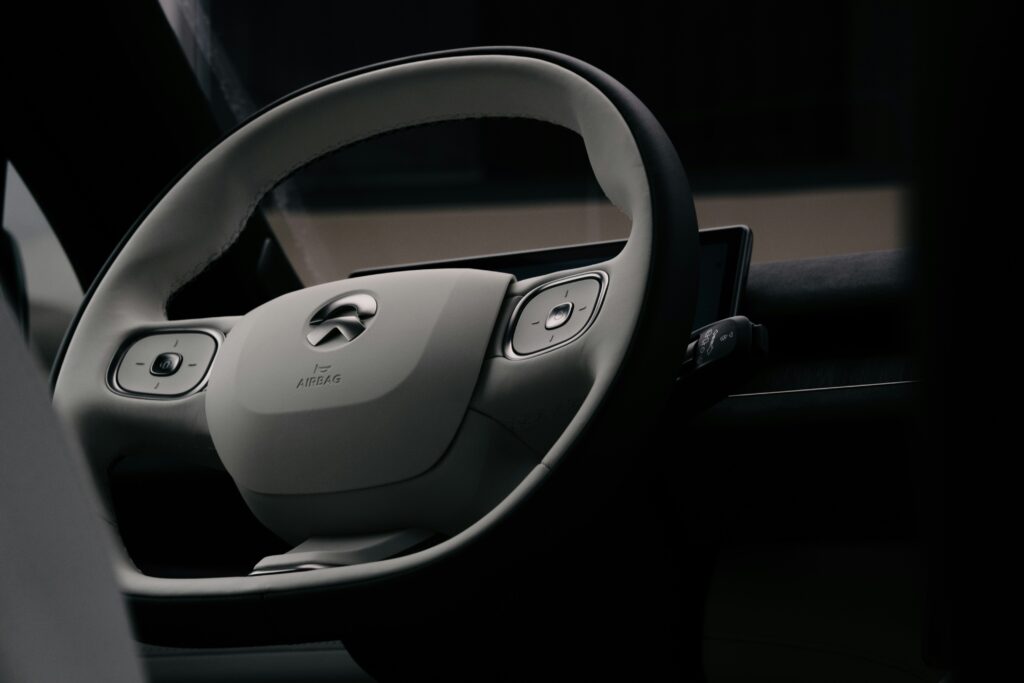
Think of an iPhone. You know it’s an iPhone, even without seeing the logo. It has a distinct look, a consistent feel, and a unique experience.
Now, try that with many Android phones; they often blend together.
This is exactly what NIO is building in the car world.
For a long time, “Chinese cars” meant bad quality. They were often cheap, felt like toys, and were full of plastic.
They didn’t sell well in the US or Europe for a reason. Now, with electric cars, Chinese brands have a battery price advantage.
Many boast good tech and flashy exterior designs that grab attention.
But often, the interior quality feels cheap, and the overall vehicle doesn’t feel like a real, lasting car.
They often feel disposable.
NIO is different.
They don’t make cheap “toys.” NIO adopts a foundational principle seen in Apple’s success.
All their cars have a clear, consistent design. You see a NIO, you know it’s a NIO. This isn’t a mistake; it’s smart.
For a luxury brand, this consistency builds instant recognition and trust.
It shows quality. They are making a “real car” feel, with premium materials and attention to detail, actively fighting that “plastic on plastic” image. They want you to see their vehicles as sophisticated and elegant machines, not just efficient gadgets.
The Ecosystem: NIO’s Unparalleled Differentiator
NIO isn’t just selling cars; they’re building a complete experience around their users.
This is their true game-changer. They play on a different difficulty level.
Just think: How hard is it to build a successful car company from scratch?
Now, make it a premium brand, knowing your sales volume will be lower than mass-market rivals. Then, at the same time, build your own nationwide “gas stations” for electric vehicles. It’s not that easy.
In a market as crowded and competitive as China’s, dominated by giants like BYD, achieving what NIO is trying to do – while still maintaining decent sales volumes – feels almost impossible.
Battery-as-a-Service (BaaS)
Take their Battery-as-a-Service (BaaS) model. This helps with big worries EV buyers have. It lowers the car’s upfront cost. You buy the car without the battery, then subscribe to use the battery.
For example, the high-end ET9 costs around $108,800 USD with the battery, but drops to about $91,200 USD with a monthly subscription. This also means you always have a healthy, updated battery. It fights battery aging and keeps the car’s value high.
Power Swap Stations
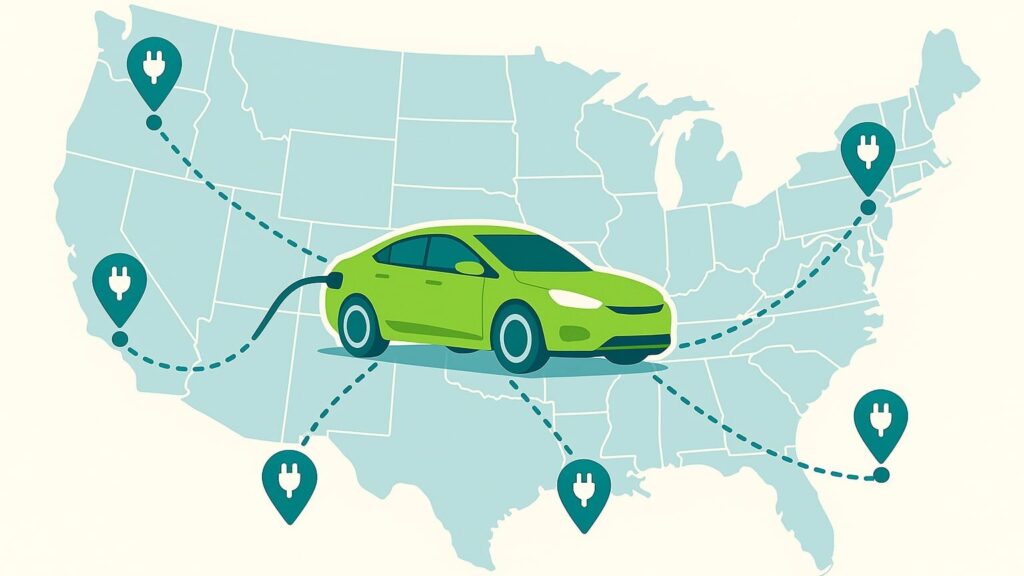
Then there are the Power Swap Stations. While others focus on fast charging, NIO offers a minute-long battery swap. This is a massive investment and a huge advantage.
As of May 2025, NIO has over 3,300 Power Swap Stations in China, and they are growing fast. Their deal with CATL, the world’s biggest EV battery maker, means they are building “the largest and most advanced battery swapping service network.” This vast network is a huge barrier for any competitor. It nearly removes range anxiety for NIO owners.
NIO House
Beyond the tech, NIO creates a strong community. Their “NIO Houses” are luxury spaces, not just showrooms.
They are places where owners can relax, work, and connect. This focus on premium service and community helps build deep loyalty. It makes customers passionate about the brand.
The Path to Profitability and Enduring Value
Investors are understandably concerned about NIO’s profitability.
The company reported a significant net loss of approximately $3.07 billion in 2024.
This is largely due to massive investments in research and development, operational expenses for building out their ecosystem, and the intense competition in the Chinese EV market.
Indeed, as NIO prepares to release its Q1 2025 financial results on June 3rd, analysts widely anticipate another quarter of losses. This is the reality of building a differentiated, capital-intensive ecosystem from the ground up, and it demands resilience from its shareholders.
However, there are clear signs of progress that often get overshadowed by quarterly losses:
- Improving Vehicle Margins: NIO’s vehicle margin has been on an upward trend, reaching 13.1% in Q4 2024, up from 9.2% in Q1 2024. The company is targeting an impressive 20% vehicle margin for 2025 for its NIO brand.
- Delivery Growth: NIO delivered 221,970 vehicles in 2024, a substantial 38.7% increase from 2023. Management has expressed strong confidence, expecting vehicle sales to double in 2025 fueled by new models like the ET9 (deliveries began in March 2025) and the launch of more affordable sub-brands like ONVO and Firefly, which will leverage the existing battery swap network.
- Targeting Breakeven: While challenges remain, NIO aims to achieve breakeven by the fourth quarter of 2025, with narrowed losses projected for the full year.
Here’s why, if NIO survives these challenging years and achieves consistent profitability, they will become almost unassailable:
Solving the Battery Dilemma: A Forever Car:
Think of luxury cars like a Rolls-Royce; their design is crafted to transcend time. NIO is doing the same. By keeping their cars simple, elegant, and futuristic, these vehicles will still feel modern and luxurious a decade from now.
For most electric cars, the battery is the biggest long-term headache. It degrades over time, reduces range, and dramatically lowers resale value. This isn’t just a concern for owners; it’s a huge problem for the entire used EV market. NIO’s Battery-as-a-Service (BaaS) model fundamentally changes this.
Customers don’t own the battery; they subscribe to it. This means they can swap for a fresh, healthy battery whenever needed, and even upgrade to newer, better battery technologies – without buying a whole new car.
In 2-3 years, when many other Chinese EVs are struggling with aging, underperforming batteries, NIO cars will still be performing optimally. This offers unparalleled longevity and helps maintain strong value, making them a more attractive long-term purchase for the consumer and building unmatched brand loyalty.
Stable, Recurring Revenue
Unlike traditional car companies that rely on one-time sales, NIO’s BaaS model provides a steady, predictable stream of recurring revenue.
This subscription income is incredibly valuable to investors, as it offers financial stability and less exposure to the volatile ups and downs of new car sales cycles.
This predictable cash flow makes future investments easier and reduces reliance on external financing.
The Data Advantage: A Goldmine of Insights:
Every battery swap, every car on the network, generates vast amounts of data. NIO collects insights on battery health, usage patterns, vehicle performance, and customer behavior.
This data is invaluable. It allows them to constantly optimize their battery technology, improve swap station placement, offer personalized services, and even explore new revenue streams like energy grid management (V2G potential).
This deep understanding of their product and users gives them an unmatched edge in continuous improvement and innovation.
NIO’s LiDAR Difference
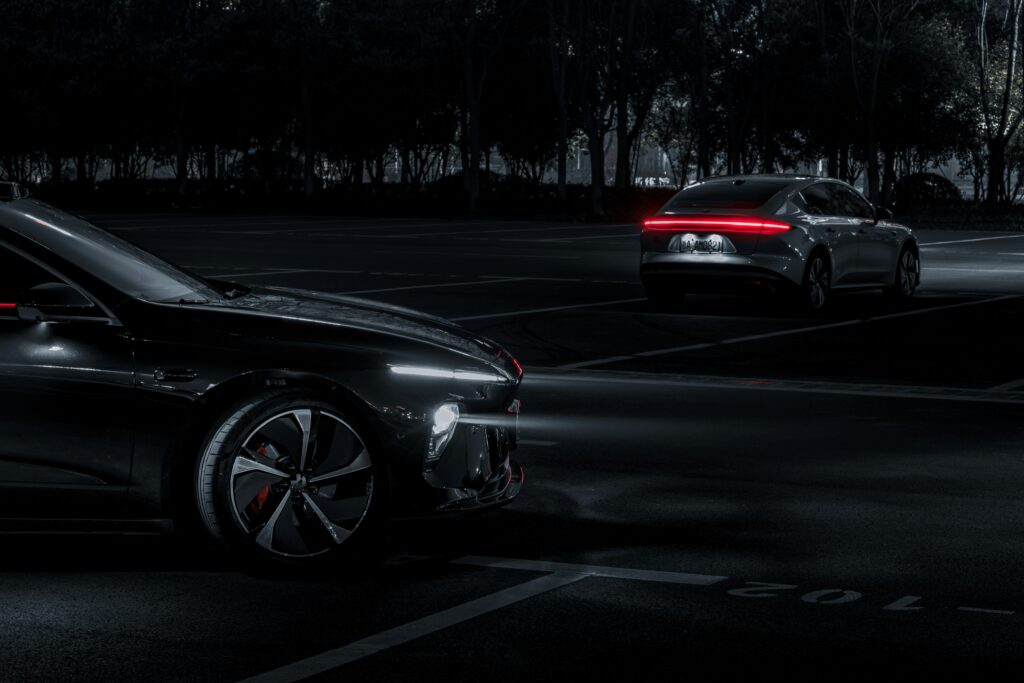
Yes, you are generally correct. NIO’s premium models (like the ET7, ET5, and the new ET9) are equipped with LiDAR (Light Detection and Ranging) sensors, in addition to cameras, radar, and ultrasonic sensors.
Tesla, on the other hand, has notably moved to an “all-camera” or “Tesla Vision” system, largely eschewing LiDAR and even traditional radar in its latest approaches for autonomous driving.
Here’s why NIO’s use of LiDAR can provide a different or “more” kind of information, and how it contributes to their strategy:
3D Depth Perception:
LiDAR emits laser pulses and measures the time it takes for them to return, creating a highly accurate 3D “point cloud” map of the environment.
This gives precise depth information, distance measurements, and the exact shape and size of objects, even in low light or at night. Cameras, by contrast, capture 2D images, and while AI can infer depth from these, it’s a more computationally intensive and potentially less direct method.
Robustness in Challenging Conditions (to an extent):
While not perfect in heavy snow or torrential rain, LiDAR generally performs better than cameras in low-light conditions (night, tunnels) or situations with strong glare or shadows.
It provides a more consistent perception of the environment.
Redundancy and Verification:
Having multiple sensor modalities (LiDAR, cameras, radar) allows for sensor fusion.
This means the car’s computer can cross-reference data from different sensors to build a more robust and reliable understanding of the world, reducing blind spots and improving safety.
If a camera is blinded by sunlight, LiDAR might still provide accurate distance data.
Object Classification and Tracking:
The precise 3D data from LiDAR can help with highly accurate object detection, classification (e.g., distinguishing between a pedestrian, a cyclist, or a parked car), and tracking their movements in real-time, even in complex environments.
In essence, LiDAR provides highly accurate spatial and depth information that cameras infer, and it does so independently of ambient light.
This can lead to a richer, more direct understanding of the physical world around the car, potentially making the autonomous driving system more robust and safer, especially in varied conditions.
The Long Game: Patience and True Value
For many, investing in NIO still feels like a gamble. Concerns about share dilution, and the idea of missing out on explosive, rapid gains, might overshadow the immense opportunity.
But the story of true value rarely involves quick, speculative returns that disappear just as fast.
NIO is playing a long game. Its vision of a “forever car” that defies battery aging, its impenetrable network of swap stations, and its continuous stream of valuable data are building an unassailable fortress.
This intricate ecosystem, combined with a design philosophy that aims for timeless elegance, sets NIO apart. It’s an investment in a future where mobility is seamless, sustainable, and utterly unique.
Building such a differentiated company from the ground up, especially in a market as fiercely competitive as China’s, demands enormous capital and even greater patience.
As Warren Buffett famously put it: “The stock market is a device for transferring money from the impatient to the patient.“
Investors focusing solely on immediate earnings reports might miss the profound strategic play unfolding. If NIO succeeds in achieving consistent profitability, its valuation will rest on solid fundamentals, recurring revenue, and a deeply loyal user base. This isn’t about fleeting sentiment; it’s about the true, enduring value of a company that could revolutionize how people experience mobility.
NIO’s path is difficult, but its unicity is its strength. For those willing to look beyond short-term noise and embrace the long horizon, the “Blue Sky Coming” might just be closer than many realize.
Awesome read on Nio! Feels like they’re really hitting their stride now. Super excited for what’s next for them!