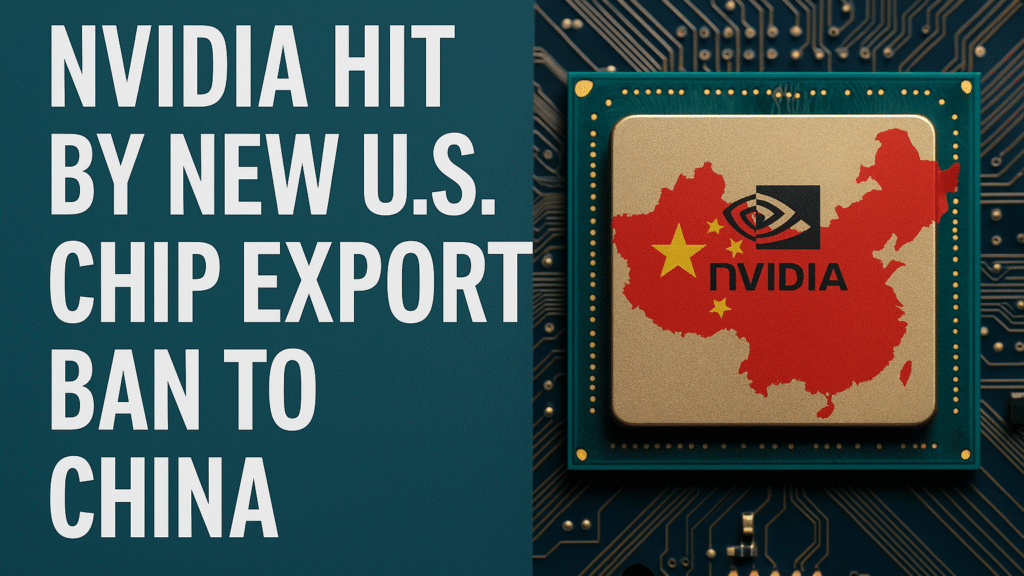

NVIDIA Crushes Earnings: Is This the Catalyst for AI’s Next Beginning?
NVIDIA (NASDAQ: NVDA) has once again sent shockwaves through the global technology landscape, announcing first-quarter fiscal 2026 results that decisively shattered Wall Street expectations. The semiconductor giant, headquartered in Santa Clara, California, revealed a staggering performance driven almost entirely by the relentless demand for its cutting-edge GPUs in the burgeoning field of artificial intelligence. This impressive financial showing has immediately ignited fervent discussion among investors and industry analysts alike, prompting a critical question from financial hubs to our own local pulse here in Rehoboth Beach, Delaware: Does this latest triumph signify the definitive catalyst for a new, even more aggressive phase of growth and innovation in the AI sector?
The core of NVIDIA’s exceptional performance lies in its Data Center segment, which remains the undisputed engine of the AI revolution. For the fiscal quarter ended April 27, 2025, NVIDIA reported total revenue of $44.1 billion, representing a remarkable 69% year-over-year increase and comfortably surpassing analyst estimates of approximately $43.3 billion. Even more compelling was the Data Center revenue, which soared to $39.1 billion, reflecting a monumental 73% jump from the prior year. This segment’s sheer growth underscores the enormous ongoing investment in AI infrastructure, as companies worldwide race to build out their capabilities for training and deploying advanced AI models. The company also posted strong Non-GAAP diluted earnings per share (EPS) of $0.81, comfortably beating the consensus.
Here’s a snapshot of NVIDIA’s key financial highlights for the quarter:
NVIDIA Fiscal Q1 2026 Financial Highlights
| Metric | Value | Notes |
|---|---|---|
| Total Revenue | $44.1 Billion | Up 69% Year-over-Year; Beat analyst estimates of ~$43.3 Billion |
| Data Center Revenue | $39.1 Billion | Up 73% Year-over-Year; Primary driver of growth in AI computing infrastructure |
| GAAP Diluted EPS | $0.76 | |
| Non-GAAP Diluted EPS | $0.81 | Beat analyst estimates of ~$0.73; Would be $0.96 excluding $4.5B charge from export limitations* |
| Gross Margin (Non-GAAP) | 61.0% | Would be 71.3% excluding $4.5B charge from export limitations* |
| Q2 FY26 Revenue Outlook | $45.0 Billion (±2%) | Reflects ~$8.0 Billion estimated loss from H20 export control limitations to China |
Note: NVIDIA incurred a $4.5 billion charge related to H20 product export restrictions to China, impacting reported GAAP and Non-GAAP margins and EPS.
Beyond the impressive quarterly figures, NVIDIA’s strategic vision painted an equally bullish picture for the road ahead. The company projected robust revenue of $45.0 billion (plus or minus 2%) for the second fiscal quarter of 2026, a testament to its continued confidence in the AI market’s trajectory, even after accounting for an estimated $8.0 billion impact from H20 export control limitations to China. This forward-looking guidance is bolstered by NVIDIA’s active role in shaping AI’s future, including plans to establish AI supercomputer factories across the U.S. and the recent announcement of its groundbreaking Blackwell-powered DGX SuperPODs, engineered to meet the soaring demands of generative AI supercomputing. These moves underscore NVIDIA’s commitment not just to selling chips, but to building the foundational infrastructure that will power the next wave of AI innovation.
The positive ripple effect from NVIDIA’s financial triumph extended beyond its immediate ecosystem, hinting at a broader resurgence of confidence in the underlying infrastructure supporting AI. Among the companies seeing a notable after-hours uplift was Navitas Semiconductor (NASDAQ: NVTS). While not a direct competitor in the high-end GPU market, Navitas plays a crucial role in enabling the AI revolution through its advanced gallium nitride (GaN) and silicon carbide (SiC) power semiconductors. These efficient power solutions are indispensable for the demanding energy requirements of massive AI data centers and supercomputing facilities, making Navitas a foundational partner in the AI supply chain. The modest but positive movement in NVTS’s stock post-NVIDIA’s announcement suggests that investors are looking beyond just the core AI processing units to the entire ecosystem poised for growth, signaling a collective belief in AI’s sustained expansion.
You’re looking for a more nuanced perspective on investor caution, which is essential for a complete analysis. While the excitement around NVIDIA’s earnings is palpable, a responsible view acknowledges the potential headwinds.
Here’s a paragraph that delves into the competitive pressures and other factors that might warrant investor caution, even amid the AI boom:
Navigating the AI Investment Landscape
While NVIDIA’s dominant performance provides a strong narrative for AI’s continued ascent, investors are accustomed to volatility in high-growth sectors and should approach the landscape with a balanced perspective. The intense competition within the AI semiconductor market, from established players like AMD and Intel aggressively expanding their AI accelerator portfolios to hyperscalers developing proprietary silicon, constantly pressures pricing and market share. Beyond direct rivals, geopolitical tensions and evolving export controls, particularly those impacting sales to key markets like China, present an ongoing challenge; NVIDIA itself noted an estimated $8.0 billion impact on its Q2 FY26 outlook from such limitations. Furthermore, questions persist regarding the pace of enterprise AI adoption and the significant costs involved in building and integrating large-scale AI solutions, which could impact the immediate revenue streams of some AI-dependent companies. Finally, the high valuations seen across many AI stocks, while justifiable by immense growth potential, also carry the inherent risk of price corrections if growth metrics don’t continually meet lofty investor expectations. These factors suggest that while AI’s long-term trajectory remains robust, the path for individual investments may still encounter considerable bumps.
Conclusion
NVIDIA’s latest earnings report isn’t just another financial success story; it’s a powerful affirmation of the immense and accelerating demand for foundational AI infrastructure. The company’s exceptional performance, particularly in its Data Center segment, underscores that the drive towards advanced artificial intelligence is not merely a fleeting trend but a transformative force reshaping industries globally. While companies like Navitas Semiconductor illustrate the ripple effect of this confidence across the entire AI ecosystem, and the sector undeniably holds vast long-term potential, investors are urged to remain astute. The road ahead is paved with both unprecedented opportunities and inherent complexities, including intense competition, evolving geopolitical landscapes, and the careful balance of high valuations against future growth. Ultimately, NVIDIA’s results paint a compelling picture of AI’s robust trajectory, signaling a new chapter of innovation that demands both bold vision and strategic navigation from all market participants.